
Over the past few weeks, our swimming programme has been welcoming Grade 4 and Grade 5 learners from local primary schools in Port Elizabeth into the pool, creating an environment where children can build confidence, learn essential water safety skills, and discover the joy of swimming. The programme is designed not only to teach swimming techniques, but also to help young learners feel comfortable and safe in the water, an important life skill that can benefit them for years to come.
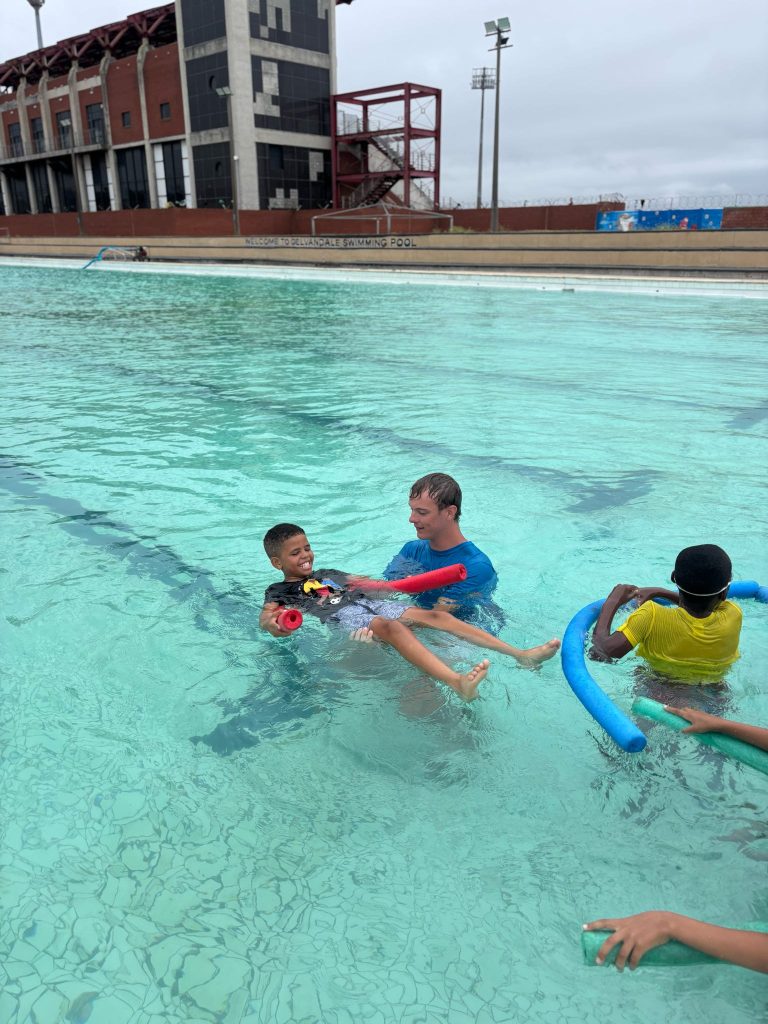
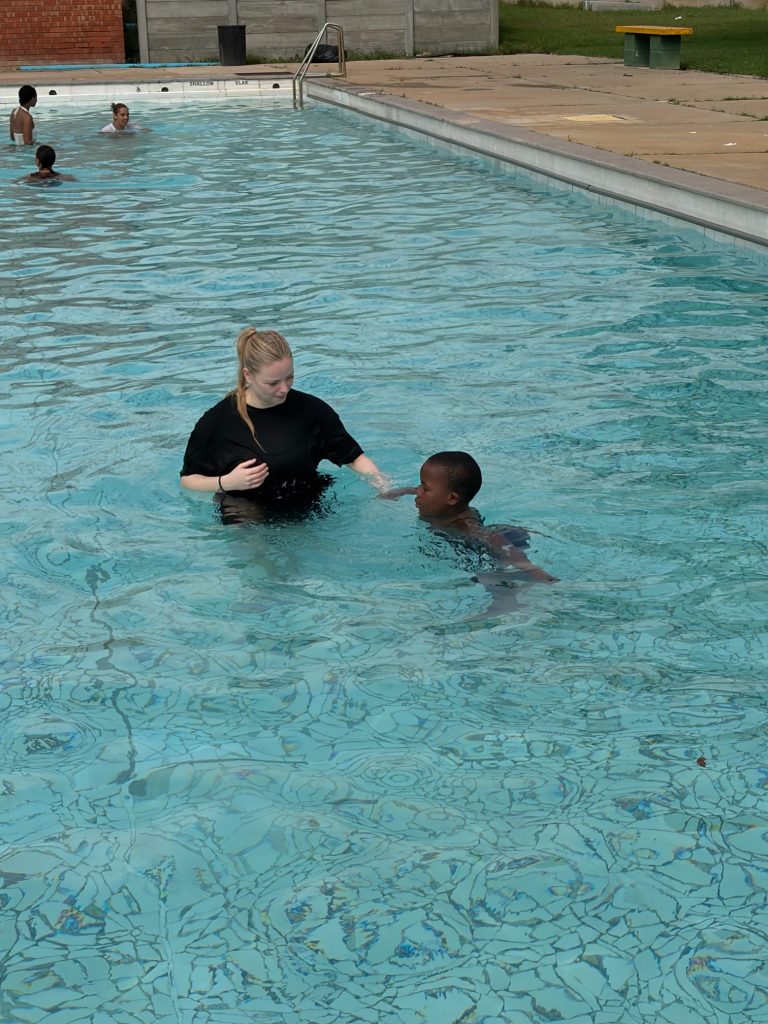
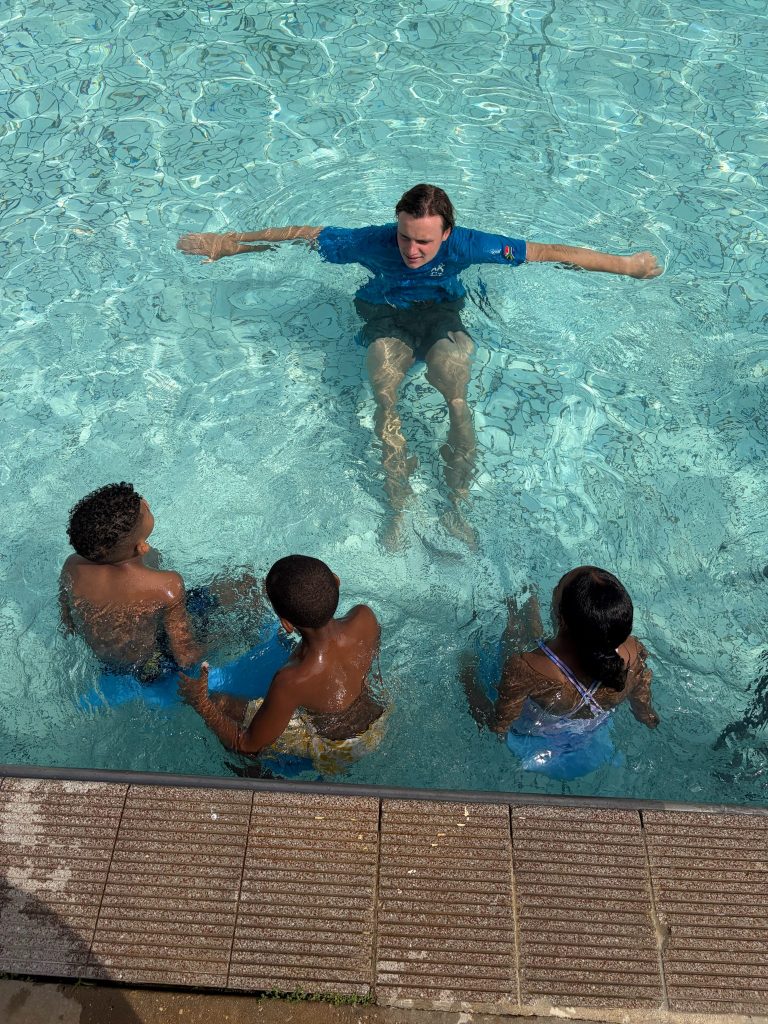
Each week, from Monday to Wednesday, 45 learners from three different schools attend the sessions. The children are between the ages of 9 and 11, and for many of them this programme provides their first structured opportunity to learn how to swim. For some learners, stepping into the pool on the first day was a completely new experience. While there was excitement, there were also understandable nerves and uncertainty about being in the water.
Taking the First Steps in the Pool
One of the most encouraging developments so far has been seeing how quickly many of the learners have grown more comfortable in the pool. Early sessions focused on helping the children become familiar with the water and building their confidence. Simple activities such as entering the pool safely, moving around in the shallow end with 1-to-1 support, and learning to relax in the water helped create a supportive and enjoyable learning environment.
Many of the learners have now reached an important milestone: they are able to float and blow bubbles in the water with confidence. While these skills may appear simple, they are fundamental building blocks for learning how to swim. Floating helps children understand buoyancy and balance in the water, while blowing bubbles encourages proper breathing techniques and reduces the fear of putting their faces in the water. For many learners, mastering these skills has been a huge achievement and a source of pride.
Developing Swimming Skills
With these foundations now in place, the focus of the programme has shifted towards developing basic swimming techniques. Currently, the sessions concentrate mainly on practising front crawl and breaststroke leg movements. These exercises help learners understand how their bodies move through the water and begin to build the coordination needed for swimming independently. Repetition, patience, and encouragement are key parts of this stage, as the children gradually improve their technique and confidence.
Another important goal at this stage of the programme is helping learners start swimming without the use of water aids. At first, many children rely on floats or other support devices to feel safe in the water. As their skills develop, coaches gently encourage them to try swimming short distances without these aids. This transition can feel like a big step for the learners, but it is also one of the most rewarding moments as they realise they are capable of moving through the water on their own.
The Impact of Volunteer Coaches
The success of the programme would not be possible without the dedication of the volunteer swim coaches who guide the learners through each session. Daniel, Tatum, Canberk, Oscar, Amber, Ollie, Marit, Noel, Robin, Isa, Karla, Lydia, and Leo work closely with the children, offering instruction, encouragement, and plenty of positive reinforcement. Their patience and enthusiasm help create a supportive atmosphere where every learner feels comfortable trying something new and celebrating their progress.
Beyond learning physical skills, the programme also helps children develop confidence, perseverance, and trust in their abilities. Each small success, whether it is floating independently, kicking correctly, or swimming a few metres without assistance, represents a meaningful step forward.
Looking Ahead
As the programme continues, it is exciting to see how much progress the learners have already made. What began with hesitant steps into the pool has grown into confident splashing, laughter, and determination. With continued practice and support, these young swimmers are well on their way to developing a lifelong relationship with the water and the valuable skills that come with it.